
NAMIBIA: THE ULTIMATE DEEP-DIVE SAFARI GUIDE
INTRODUCTION: BEYOND THE SAVANNAH
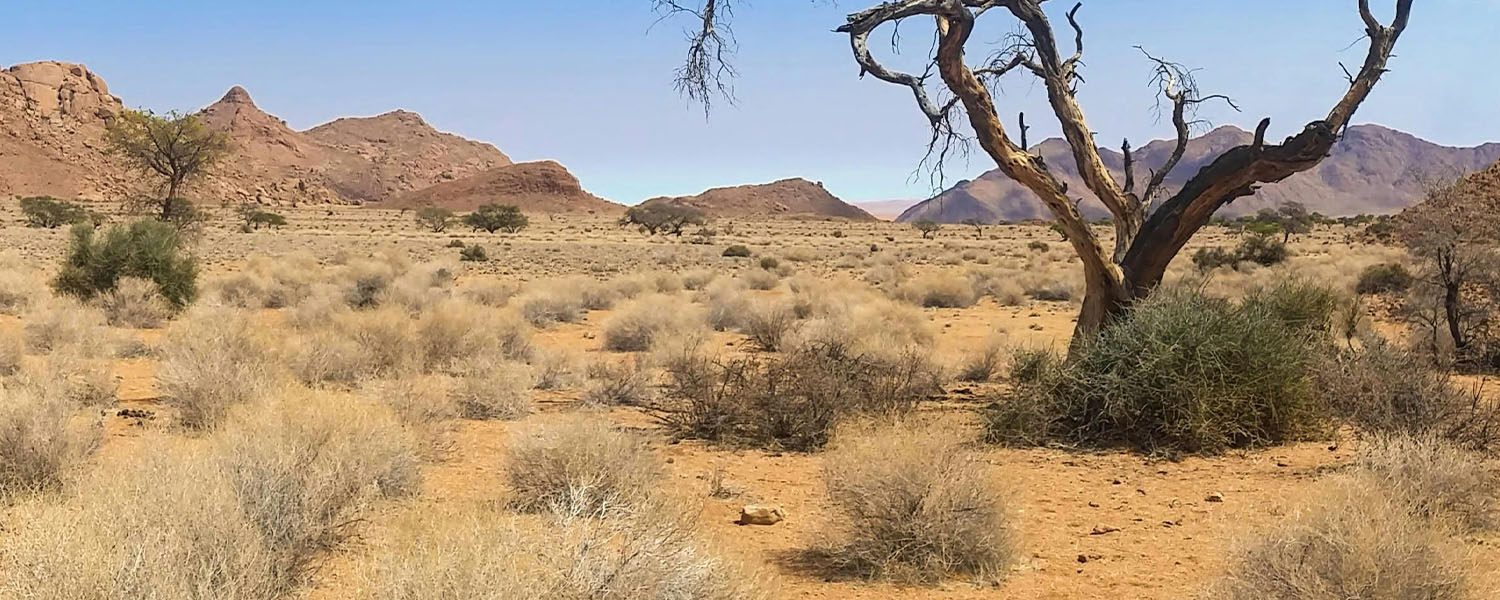
Namibia is not a traditional safari destination. It is a land of hyperbole and contradiction, where life thrives against impossible odds. It is a country defined by absence: the absence of water, of people, of sound. This emptiness creates a profound, almost spiritual experience. The safari here is as much about geology, light, and space as it is about wildlife. Namibia operates on a scale that is humbling. Distances are measured in hundreds of kilometers, landscapes in millions of years, and skies in infinite stars. It is a destination for the self-reliant traveler, the photographer obsessed with light, and the soul seeking silence.
THE CORE DIFFERENCE: CONSERVATION PHILOSOPHY
Namibia’s revolutionary approach is enshrined in its constitution. The government granted communities the right to form “communal conservancies” and profit from wildlife on their lands. This model turned poachers into protectors. There are now 86 communal conservancies covering over 20% of the country. When you stay at a lodge in Damaraland or track rhino with a guide from the Save the Rhino Trust, your money goes directly to the community. This is not passive tourism; it is participatory conservation. Wildlife populations have soared as a result. The desert-adapted black rhino, once teetering on the edge, now represents the largest free-roaming population in Africa. Lion numbers in the northwest have increased by 400%. This is the tangible success story you are buying into.
NAMIBIA’S ATTRACTIONS
ETOSHA NATIONAL PARK – THE MINERAL PAN THEATRE
Etosha is not a typical park. It is an ecosystem engineered by a single geological feature: the Etosha Pan. This vast, white, saline depression acts as a giant reflector, amplifying heat and light. The ecology is brutally simple. In the wet season (Jan-Apr), the pan can fill with a thin layer of water, attracting spectacular flocks of flamingos. But the true drama unfolds in the dry season (May-Oct). All surface water evaporates except for the permanent springs along the southern edge. Every living thing is forced to these few dozen waterholes.
THE WATERHOLE DYNAMIC: This creates unparalleled game viewing. You do not search for animals; you take a seat at a waterhole and let the animals come to you. The strategy is one of patience. You will see hierarchies play out: elephants dominating access, rhinos arriving warily at dusk, lions using the waterhole as a trap. The floodlit waterholes at Okaukuejo and Halali rest camps are world-famous. Sitting in silence as a black rhino and calf materialize from the darkness into the electric glow is a transcendent experience.
KEY SPECIES BEHAVIOR: Watch for the “Etosha Shuffle” of elephants kicking up saline crust to reach fresher soil underneath. Observe the black-faced impala, an endemic subspecies, browsing on tougher shrubs others avoid. The park is a stronghold for the endangered black rhino. Cheetah are frequently seen on the eastern plains. The lack of buffalo means the lion prides specialize in hunting gemsbok and springbok, requiring different techniques than tackling larger prey.
THE NAMIB DESERT – SOSSUSVLEI & BEYOND
The Namib is a desert of gradients. It is not uniformly dry. The coastal belt is a fog desert, receiving almost no rain but life-sustaining moisture from the Benguela Current’s fog that rolls 50km inland. Further east, it becomes a rain-shadow desert. Sossusvlei sits in the transitional zone.
THE DUNE PHYSICS: The iconic red dunes are not static mountains. They are rivers of sand, moving eastward at a rate of about 10 meters per year. The red color comes from iron oxide, which coats each grain of sand. The older the dune, the deeper the red. Dune 45 is not the tallest, but its perfect shape and accessibility make it iconic. Climbing it is a physical challenge; the sand gives way, and the angle is steep. The reward is a view of a sea of parallel dunes, aligned perfectly by the prevailing south-western winds.
DEADVLEI’S FROZEN MOMENT: Deadvlei is a clay pan formed when the Tsauchab River was blocked by encroaching dunes 900 years ago. The camel thorn trees died, but the hyper-arid climate mummified them. They did not petrify; they desiccated. The blackness is not burn, but a patina of extreme sun exposure. The white clay pan cracks into a geometric puzzle. The visual contrast—black trees, white clay, orange dune, blue sky—is the most pure composition in nature photography.
DESERT-ADAPTED LIFE: This is a lesson in evolutionary ingenuity. The fog-basking tok tokkie beetle performs a headstand on dune crests to condense fog droplets on its body, which then trickle to its mouth. The sidewinder adder moves in a J-shaped lateral roll to prevent sinking and minimize body contact with hot sand. The oryx can allow its body temperature to rise to 45°C, shutting down non-essential functions and radiating heat from a specialized nasal blood vessel network before needing to sweat.
DAMARALAND & TWYFELFONTEIN – GEOLOGICAL LIBRARY
Damaraland is a wilderness of broken rock, ancient rivers, and staggering geology. It feels primordial.
TWYFELFONTEIN ROCK ENGRAVINGS (UNESCO): This is not random art. It is a sacred site, a library of knowledge for San hunter-gatherers. The over 2,500 engravings were made using quartz tools to peck through the dark desert varnish on the sandstone, revealing the lighter rock beneath. They depict species no longer found here: rhino, elephant, giraffe. This is a record of a wetter climate. The “Lion Man” figure—a human with a lion’s tail and pawed feet—suggests early shamanistic transformation beliefs. The guide’s interpretation is key; they explain the hunting scenes, the spiritual symbols, and the site’s likely use as an initiation school.
THE ORGAN PIPES: These are dolerite columns, a geological phenomenon caused by the slow, even cooling of basaltic magma underground. As it cooled, it contracted and cracked in a hexagonal pattern, like mud drying. Subsequent erosion exposed these perfect, pillar-like formations.
THE BURNT MOUNTAIN: This is shale rich in iron and manganese. In the late afternoon light, the oxidation of these minerals creates an illusion of the mountain being on fire, glowing in deep reds, purples, and blacks. It is a study in mineralogy made visible by light.
DESERT ELEPHANT TRACKING: This is the ultimate guided experience. Tracking is a forensic science. Your guide reads the sand: the size of the footprint, the depth of the impression, the scatter of dung, the direction of broken branches. You learn that elephants follow specific seasonal routes along ancient riverbeds, memorized over generations. Finding them is a victory. Observing them is to see adaptation in action: they travel farther, eat a wider variety of vegetation (including toxic plants others avoid), and can smell water from kilometers away.
THE SKELETON COAST – THE BONE YARD
This is the Namibia of legend, a place where the cold Benguela Current collides with the searing Namib Desert.
THE BENGUELA ECOSYSTEM: This cold current creates an upwelling of nutrient-rich water from the ocean floor. This fuels phytoplankton, which feeds zooplankton, which supports one of the richest marine ecosystems on Earth. This abundance is why the Cape fur seal colony at Cape Cross can exist—over 200,000 seals at its peak. The smell is overwhelming, the noise deafening. Predators like brown hyenas and jackals patrol the periphery for pups.
SHIPWRECKS AND FOG: The cold current also creates the dense, blanketing fog for which the coast is infamous. This fog, combined with the rocky shoreline and strong currents, doomed hundreds of ships. The wreck of the Eduard Bohlen, now beached hundreds of meters inland due to the shifting dunes, is the most surreal. It speaks to the power of this environment to consume human endeavors.
DESERT LIONS OF THE HOANIB: The lions of the northern Skeleton Coast are the apex adaptation. They are larger than other desert lions, with powerful limbs for walking vast distances on sand. They have learned to hunt Cape fur seal pups. They have been recorded traveling 70km in a single night. Seeing them requires a fly-in safari to a remote camp and immense patience. It is one of Africa’s rarest predator sightings.
ACCESS TIERS: The southern coast near Swakopmund is easily accessible. The central section to Terrace Bay requires a 4×4 and permits. The true northern wilderness, from the Hoanib River to the Kunene, is accessible only by authorized fly-in safaris. This tiered access preserves the extreme remoteness of the most fragile areas.
THE CAPRIVI STRIP – NAMIBIA’S WET SECRET
This 450km-long panhandle is a geographical anomaly, a remnant of colonial bargaining. Ecologically, it is a piece of the Okavango Delta system.
RIVER-BASED SAFARIS: The experience here is the opposite of the desert. It is about water. Boat safaris on the Kwando, Linyanti, and Zambezi rivers reveal a different Namibia. You glide past hippo pods, watch crocodiles bask, and see elephants swim from island to island, using their trunks as snorkels. Birdlife is prolific and colorful—malachite kingfishers, African skimmers, Pel’s fishing owls.
KEY SPECIES DIFFERENCES: This is where you find species absent from the arid west: the majestic sable and roan antelope in Mahango, dense hippo populations, the rare red lechwe, and large herds of buffalo. Predators include wild dog, lion, and leopard. The ecosystem is connected to Botswana’s Chobe and Linyanti, allowing for massive seasonal animal movements.
THE FISHING: The Zambezi River offers world-class tigerfishing. This is a catch-and-release sport targeting one of the world’s most ferocious freshwater fish, with razor-sharp teeth and acrobatic fights.
THE HUMAN ELEMENT – HIMBA AND SAN CULTURES
Engaging with communities is not a zoo visit. It is a respectful transaction. The Himba are semi-nomadic pastoralists. The women’s iconic red-tinged skin and elaborate hairstyles are functional and cultural. The otjize paste of butterfat, ochre, and aromatic herbs protects against sun, insect bites, and cleanses the skin. Hairstyles indicate age, marital status, and social rank. A visit to a homestead should be arranged through a community-owned camp or guide. It involves a formal greeting, sitting in the shade, and a demonstration of daily life. Purchasing handmade jewelry directly from the women is a meaningful way to support them.
The San are the original inhabitants. A visit to the Living Hunter’s Museum is an interactive lesson in survival. You will learn how to make fire with sticks, identify edible and medicinal plants, and see the ingenious crafting of bows, arrows, and poison from beetle larvae. It is a testament to deep, intimate knowledge of a harsh environment.
THE INTANGIBLE EXPERIENCE
Ultimately, Namibia’s greatest attraction is a feeling. It is the feeling of standing on a dune at dawn, the only sound the wind sculpting the sand. It is the vast, star-crowded sky, undimmed by light pollution, where the Milky Way casts a shadow. It is the patience required at a waterhole, where you become part of the landscape, and the animals accept your silent presence. It is a journey that is as much internal as external. You do not just see Namibia; you feel its scale, its age, and its silence in your bones. It is the anti-thesis of a crowded game drive, offering instead a personal, awe-inspiring dialogue with the raw elements of our planet.
No Comments