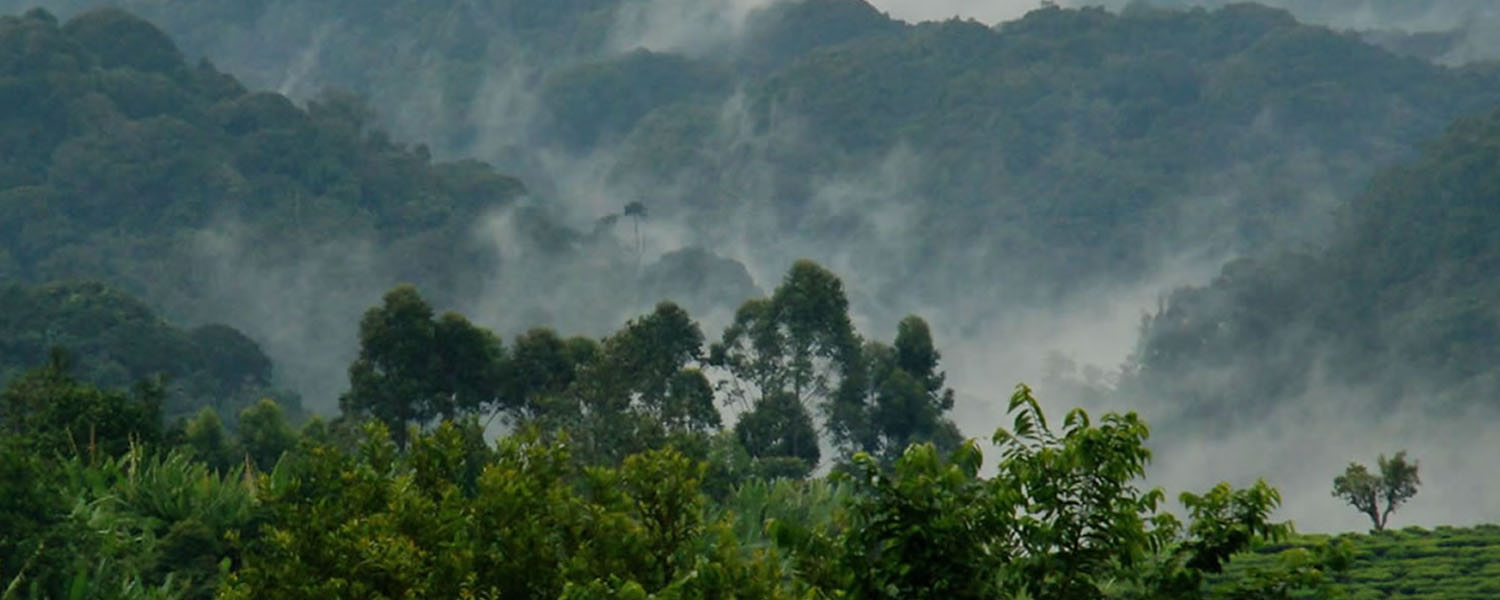
Gishwati Mukura National Park
Gishwati-Mukura National Park, established in 2015 as Rwanda’s fourth national park, is a conservation story of remarkable recovery. Located in the west of the country, the park comprises two separate forest fragments—the larger Gishwati and the smaller Mukura—situated along the biodiverse Albertine Rift on the ridge dividing the Congo and Nile water catchment areas.
This young park is a haven for biodiversity. It is most famous for its population of approximately 20 to 35 Eastern Chimpanzees, which share the forest with other primates like the endemic Golden Monkey, L’Hoest’s Monkey, and Blue Monkey. The park is also a premier birding destination, with over 232 bird species recorded in Gishwati alone, many of which are Albertine Rift endemics. Other wildlife includes mammals like the black-fronted duiker and southern tree hyrax.
Visitors to the park can engage in various activities, which officially began in 2019. The main draws are guided chimpanzee and golden monkey tracking, though it’s important to note that the chimps are not fully habituated, making sightings less guaranteed than in other parks. Other popular activities include bird watching, guided nature hikes through the forest to see waterfalls like Kazeneza, and immersive cultural encounters with local communities, which can involve farm stays, traditional dance, and learning from healers.
The park’s creation is a direct response to severe environmental degradation. Following the 1994 genocide, the forests were heavily deforested for resettlement, farming, and illegal mining, losing over 80% of their cover. Its formal protection, supported by major conservation projects and a 25-year management agreement with Wilderness Safaris, aims to restore the ecosystem, regulate water flow, and improve livelihoods in surrounding communities, making it a benchmark for community-driven conservation.
Recommended