Damaraland
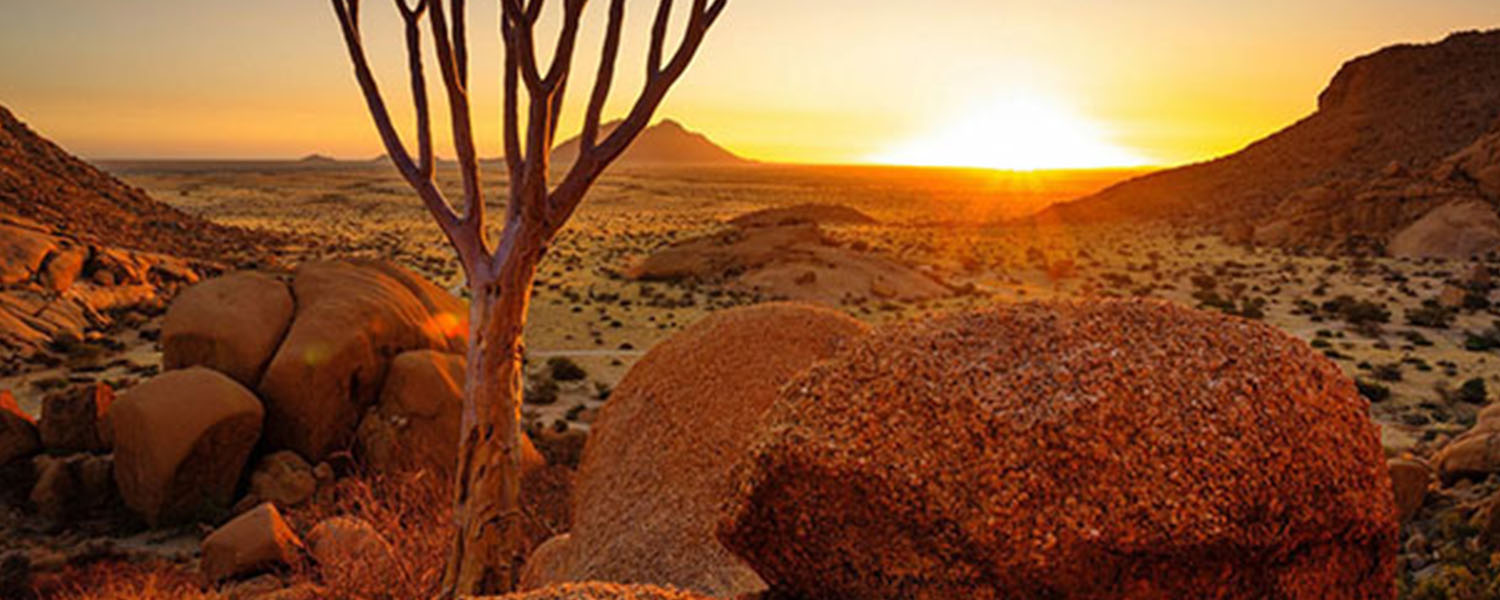
Damaraland is a vast, semi-desert wilderness in northwestern Namibia, famed for its dramatic geological scenery and unique, desert-adapted wildlife. Its landscape is a striking tapestry of ancient mountains, deep valleys, and wide-open plains, shaped by volcanic forces over 125 million years ago when Africa was part of the supercontinent Gondwana. Key geographical features include the Brandberg massif—Namibia’s highest mountain—and the Huab River Valley, which forms a rare oasis in this arid terrain. The region adjoins the treacherous Skeleton Coast and offers visitors a profound sense of space, silence, and remoteness.
Despite its harsh environment, Damaraland supports an array of wildlife that has adapted to survive with minimal water. The most iconic animals are the elusive desert elephants and the critically endangered black rhino, which can be tracked on foot with expert guides in conservation areas like the Palmwag Concession. Other mammals include gemsbok, kudu, springbok, and nomadic Hartmann’s mountain zebra, while over 250 bird species have been recorded. It is crucial to understand that this is not a classic Big Five safari destination; wildlife is sparse, making every sighting a special reward for patience and skilled tracking.
Beyond wildlife, Damaraland is steeped in ancient history and offers remarkable cultural experiences. The region’s premier attraction is the UNESCO World Heritage Site at Twyfelfontein, home to one of southern Africa’s largest concentrations of rock art, with up to 5,000 petroglyphs and paintings estimated to be up to 10,000 years old. Visitors can also explore the Petrified Forest, the geological wonders of the Organ Pipes and Burnt Mountain, and learn about the indigenous Damara people at the unique Living Museum of the Damara, which reconstructs a hunter-gatherer culture nearly lost to history.
Visiting Damaraland requires planning to match its rugged nature. The best time for travel is during the dry season from May to October, when days are warm, nights are cold, and wildlife congregates at known waterholes. The region is a premier self-drive destination, with good gravel roads linking lodges and attractions, though a well-equipped 4×4 vehicle is recommended for exploring remoter areas. Accommodations range from rustic campsites to luxurious lodges such as Damaraland Camp and Desert Rhino Camp, which offer guided activities and seamless connections to other Namibian highlights like Etosha National Park and Sossusvlei.
Recommended