Kibale Forest National Park
Kibale Forest National Park is a globally significant protected area in western Uganda, celebrated as the primate capital of Africa. Initially gazetted as a forest reserve in 1932, it was formally established as a national park in 1993 to protect a large tract of forest that had previously been managed for timber. The park spans 766 square kilometres and forms a continuous forest with Queen Elizabeth National Park, creating a vital 180-kilometre wildlife corridor for animals like elephants to move between the two areas. Its terrain is diverse, ranging from 1,100 metres on the Rift Valley floor to 1,600 metres in elevation in the north.
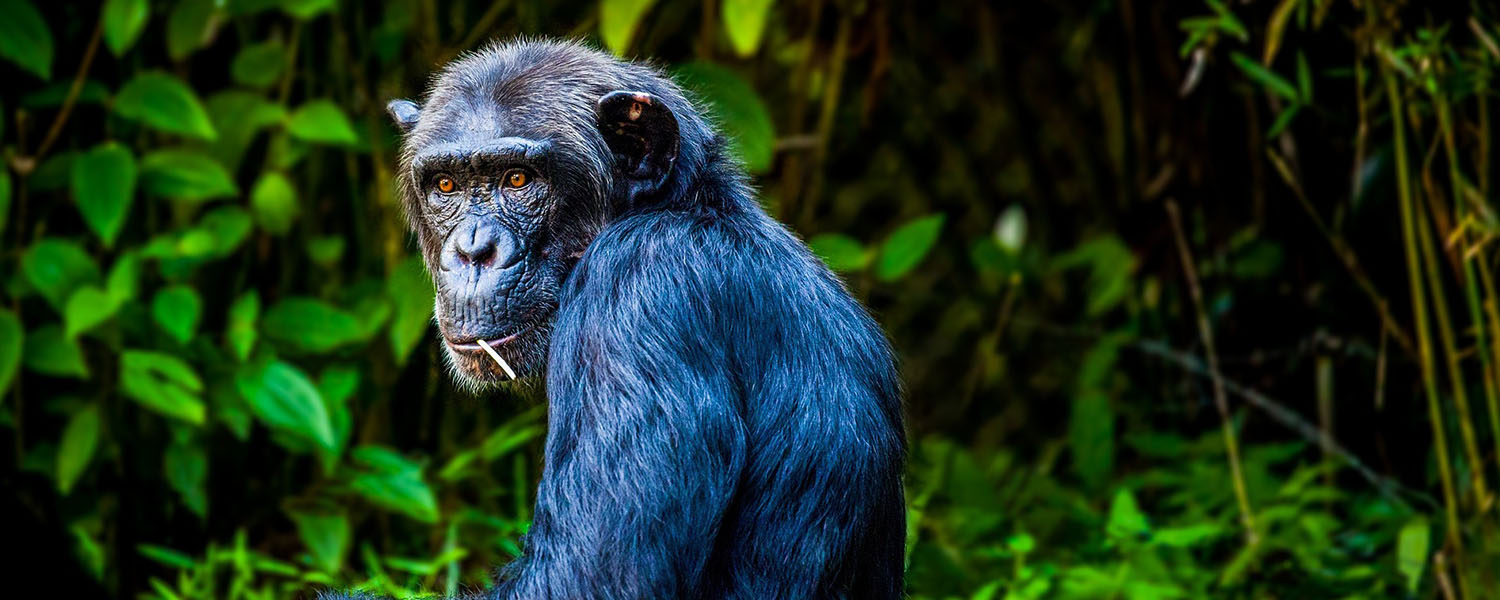
The park’s primary fame stems from its incredible primate diversity and density. Kibale is home to 13 primate species, the highest concentration in East Africa, and supports a population of over 1,500 chimpanzees. Four chimpanzee communities are habituated for tourism, with the Kanyanchu community offering daily tracking experiences that boast a sighting success rate of over 90%. Beyond chimpanzees, visitors can encounter other primates such as the endangered Ugandan red colobus monkey, the rare L’Hoest’s monkey, black-and-white colobus, red-tailed monkeys, and olive baboons. Kibale’s biodiversity extends far beyond primates, encompassing over 370 bird species—including 23 Albertine Rift endemics—and other mammals like forest elephants, buffaloes, and leopards.
For tourists, the park offers a range of activities centred on its unique ecosystem. The main attraction is guided chimpanzee tracking, where visitors hike through the forest to spend one hour observing these intelligent apes; permits for this must be booked in advance. For a more immersive experience, the Chimpanzee Habituation Experience allows a full day with a semi-habituated group. Other popular activities include birdwatching, especially for sought-after species like the green-breasted pitta, and nature walks through the lush forest and nearby Bigodi Wetland Sanctuary. Cultural tours to local Batooro and Bakiga communities add a human dimension to the visit.
Kibale experiences a tropical climate with warm, wet conditions year-round and lacks a true dry season. However, the best time to visit for chimpanzee tracking is during the drier months of December to February and June to August, when forest trails are less muddy and slippery. The park can be reached by a 5-6 hour drive from Kampala via Fort Portal or by a scheduled flight to Kasese airstrip followed by a two-hour road transfer. Visitors are advised to pack waterproof clothing, insect repellent, and sturdy hiking boots regardless of the season.
Recommended